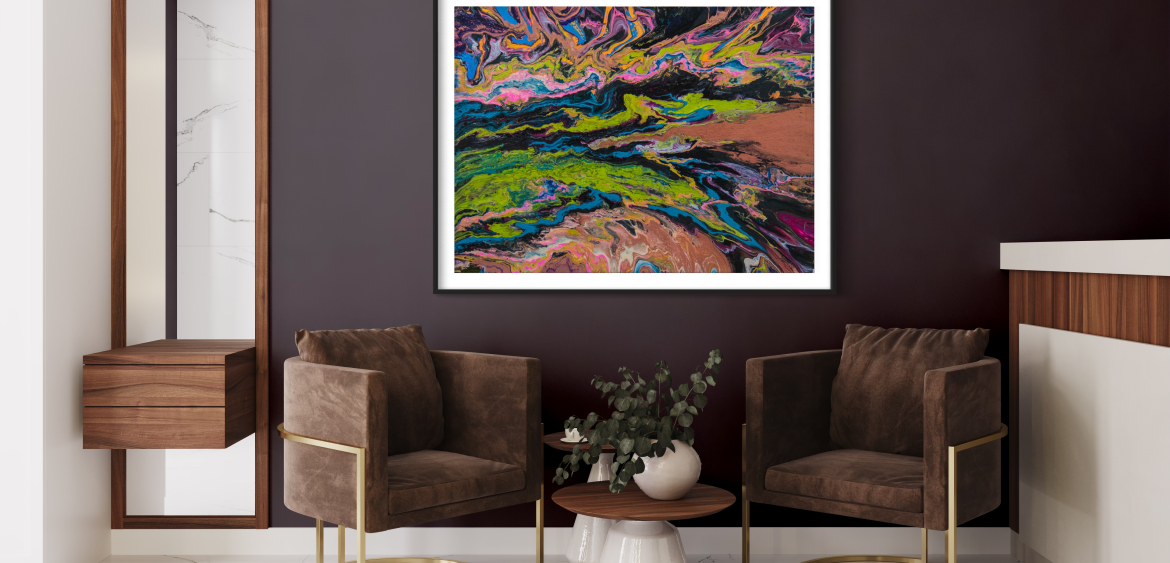
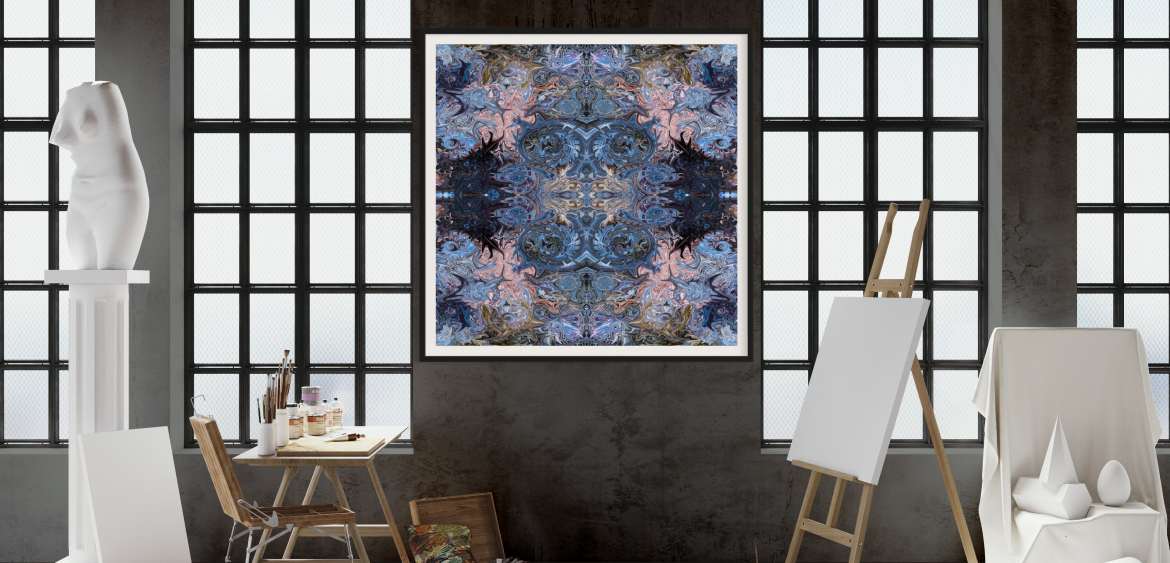
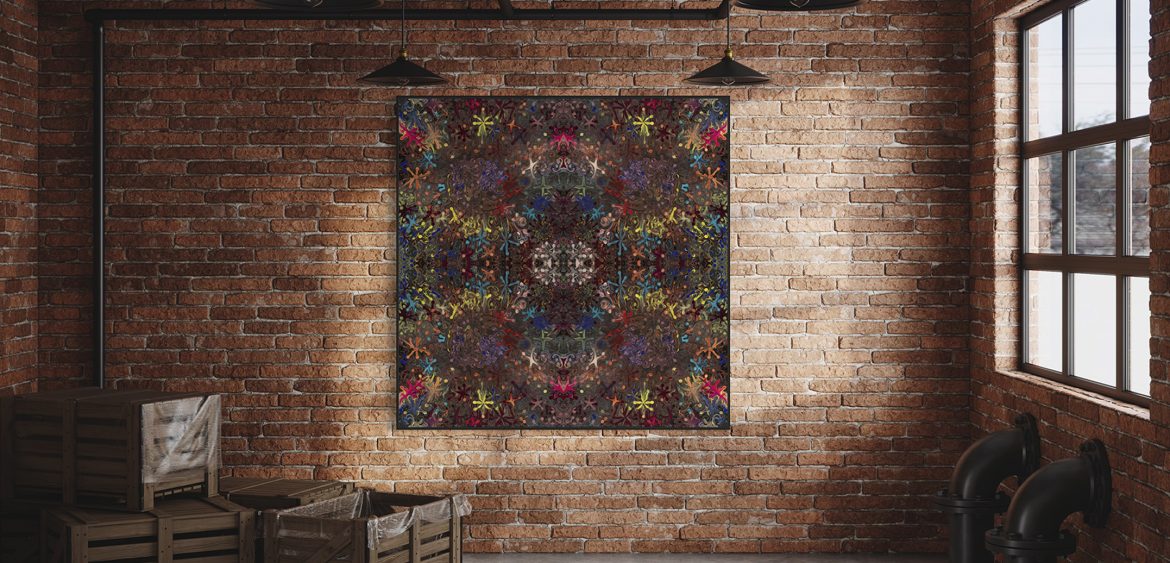
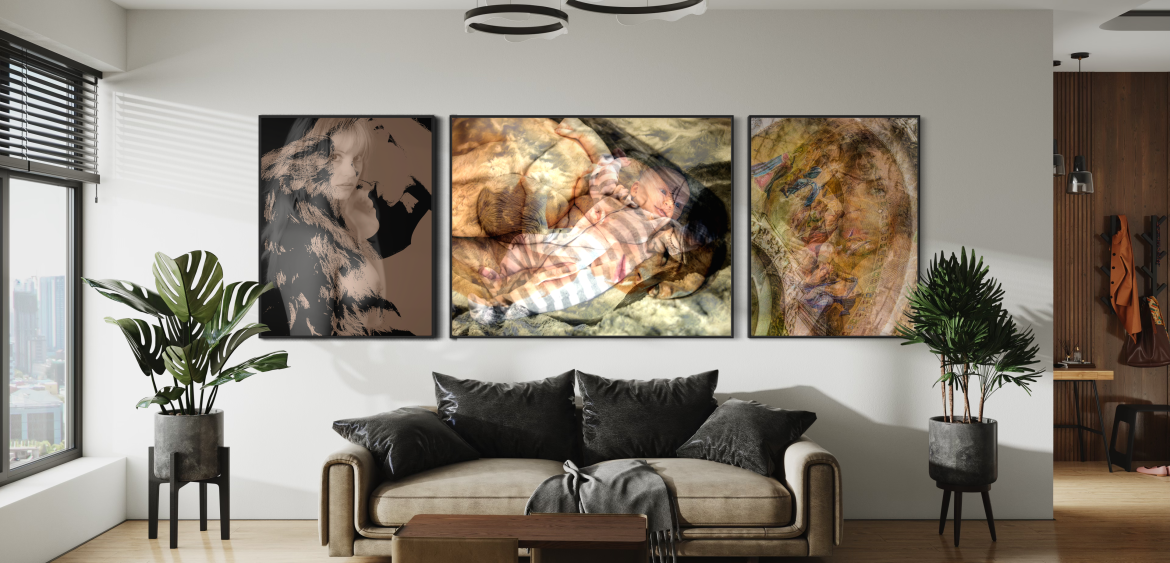
Abstraction is a form of art that encourages imagination and emotional involvement. Its roots lie in the intuition and freedom of the artist, who has the ability to look beyond the physical and translate intangible emotions onto the canvas. The audience then has the opportunity to connect with the artist's intention and free their own mind of visual restrictions.
Historically, abstraction emerged in the nineteenth century as a reaction to academic painting or realism. Whereas realism pays attention to every tiny detail, abstraction gives the artist the freedom to trust their intuition to create art that is equally worthy of an audience. The most important thing to understand about abstract art is that it does not have to have a meaning, narrative or even a singular explanation. Read More
The impasto painting technique involves applying thick layers of paint to a surface utilizing a brush, palette knife, or other exciting tools like spatulas, sponges, or even fingers. This application adds a textured or three-dimensional effect to the piece, allowing the artist to create a sense of depth, volume, and movement in the artwork. The term "impasto" is derived from the Italian word for "paste" or "dough," which accurately describes the consistency of the paint used in this technique. While impasto is most often associated with oil painting, it can be used with other types of paint, including acrylic, gouache, and even watercolors. Additives can be mixed into the various paint types, changing the viscosity, adding a unique quality to each piece, and affecting drying times.
The texture created by impasto changes how light interacts with the painting, resulting in fascinating effects of light and shadow. The raised surfaces of the paint catch the light differently, creating a sense of depth and luminosity. To add to this effect, impasto can be combined with other techniques like underpainting or glazing, changing the painting's textural effects and hue variations.
Overall, the impasto painting technique offers artists a way to add dimension and expressiveness to their work through the physicality of the paint. This versatile technique can create various effects, from adding subtle texture to building bold, sculptural forms. Read More
Scotomisation - a term that's not in most people's vocabularies, yet it plays a significant role in how we perceive the world around us. It refers to our tendency to see what we want to see and ignore what we don't. This psychological phenomenon is particularly relevant in the blockbuster movie, The Da Vinci Code. In a pivotal scene, the characters discuss the possible hidden images in Leonardo da Vinci's masterpiece, The Last Supper. Is Mary Magdalene in the picture? Are Mary and Jesus married? Where is the Holy Grail? Sir Leigh Teabing, played by Ian McKellan, refers to scotomisation as a key concept to unlocking the mystery within a mystery within a mystery. Understanding this concept is crucial to comprehending why people perceive differently what's in The Last Supper, the artistic and historical mysteries surrounding it, and the excitement surrounding The Da Vinci Code book and movie. Read More
Symmetrical balance has been used in art throughout history, from classical Greek and Roman architecture to the Taj Mahal in India. One of the most famous examples of symmetrical balance is Leonardo da Vinci’s Vitruvian Man, which depicts a man with his arms and legs outstretched in a perfect circle and square.
In painting, symmetrical balance was often used in religious art to convey a sense of order and harmony. Vincent van Gogh’s painting “The Starry Night” is an example of symmetrical balance, with the cypress tree and the village on either side of the painting.
Symmetrical balance involves dividing a composition into equal parts on either side of a central axis, while asymmetrical balance involves creating balance through the use of different visual elements. Radial balance, on the other hand, involves arranging visual elements around a central point. While symmetrical and asymmetrical balance create a sense of stability, radial balance can create a sense of movement and energy in the design. Read More
Art Therapy – A form of psychotherapy. It involves the encouragement of free self-expression. This is achieved through painting, drawing, or modeling. Art Therapy is used as a remedial activity or an aid to diagnosis. Art therapy is a distinct discipline that incorporates creative methods of expression through visual art media. Art therapy originated in the fields of art and psychotherapy. It is a creative arts therapy profession and may vary in its definition. There are three main ways that art therapy is employed. The first one is called analytic art therapy. Analytic art therapy is based on the theories that come from analytical psychology, and in more cases, psychoanalysis. Analytic art therapy focuses on the client and the therapist. It involves ideas that the client and therapist transfer between them through art. Another way that art therapy is utilized is art psychotherapy. This approach focuses more on the psychotherapist and their analysis of their clients’ artwork verbally. The last way art therapy is looked at is through the lens of art as therapy. Some art therapists practicing art as therapy believe that verbal analysis of the client’s artwork is not essential. Therefore, they stress the creation process of the art instead. In all […] Read More
Expanding Your Abstract Horizons: A Guide to Exploring New Mediums and Techniques
Abstract art is a realm of boundless possibilities, a playground for experimentation and self-discovery. As an artist, your journey involves constantly pushing boundaries, exploring new mediums, and refining your unique style. Inspired by the innovative approach of John Dowling Jr., let's delve into a world of techniques that can add depth and dimension to your abstract creations.
1. Embrace the Digital Realm: Transforming Photographs into Abstract Art
In today's digital age, the lines between photography and painting are increasingly blurred. Dowling's masterful integration of digital image processing into his artistic process offers a compelling example of how technology can enhance and expand the possibilities of abstract expression.
Here's how you can explore this technique:
Capture the Essence: Start with a photograph that speaks to you, whether it's a landscape, a portrait, or an abstract composition. Look for images with interesting textures, colors, and patterns that can serve as a foundation for your abstract transformation.
Digital Manipulation: Import your photograph into a digital editing software like Photoshop. Experiment with various tools and filters to manipulate the image, distorting, blending, and abstracting the original forms.
Liquify and Transform: Explore the Liquify tool in Photoshop to push, pull, and warp the image, creating fluid and dynamic shapes. Experiment with different brush sizes and pressures to achieve a variety of effects.
Layer and Blend: Don't be afraid to layer multiple images or textures, creating a rich tapestry of visual elements. Experiment with different blending modes to achieve unique and unexpected results.
Color Play: Adjust the colors, saturation, and contrast of your image to create a mood and atmosphere that complements your artistic vision.
Print and Enhance: Print your digital creation on high-quality paper or canvas. Consider adding further layers of texture or paint to create a truly unique and multi-dimensional artwork. Read More
Image manipulation is a powerful tool for artists seeking to push the boundaries of visual expression. By transforming and combining images, you can create surreal, abstract compositions that tell stories, evoke emotions, and challenge perceptions. Inspired by the innovative approach of John Dowling Jr., let's explore a range of image manipulation techniques to elevate your abstract art.
1. The Art of Superimposition:
Superimposing images involves layering multiple photographs or digital elements to create a single, composite image. This technique can be used to create dreamlike scenes, juxtapose contrasting elements, or add depth and complexity to your artwork.
Blending Modes: Experiment with different blending modes in Photoshop, such as "Overlay," "Multiply," or "Screen," to achieve various effects and create seamless transitions between layers.
Opacity Adjustments: Control the transparency of each layer to reveal or conceal elements, creating depth and visual interest.
Masking: Use masks to selectively reveal or hide portions of an image, allowing for precise control over the composition. Read More
Contemporary Art: A Dynamic Reflection of Our Times Contemporary art is a vibrant tapestry of creative expression. It is ever-evolving and reflects the complexities of our modern world. It also shows the contradictions of our era. It’s a realm where boundaries are pushed, traditions are challenged, and new forms of artistic language emerge. Key Characteristics of Contemporary Art: Examples of Contemporary Art: Digital Art: A New Frontier in Artistic Expression Digital art, once considered a niche genre, has become an integral part of the contemporary art landscape. It includes various mediums and techniques. These range from digital painting and photography to animation. It also covers video art and interactive installations. Key Aspects of Digital Art: John Dowling: A Master of Integrated Art John Dowling Jr. exemplifies the spirit of contemporary art, seamlessly blending traditional and digital techniques to create captivating and innovative works. His art proves the power of integrated art. Diverse mediums and approaches converge to form a unique and expressive whole. John Dowling’s Multi-Disciplinary Approach: John Dowling’s art is highly desirable for several reasons: John Dowling explores diverse possibilities of contemporary art and digital technologies. His work is unique and compelling. It is both aesthetically captivating and conceptually […] Read More