

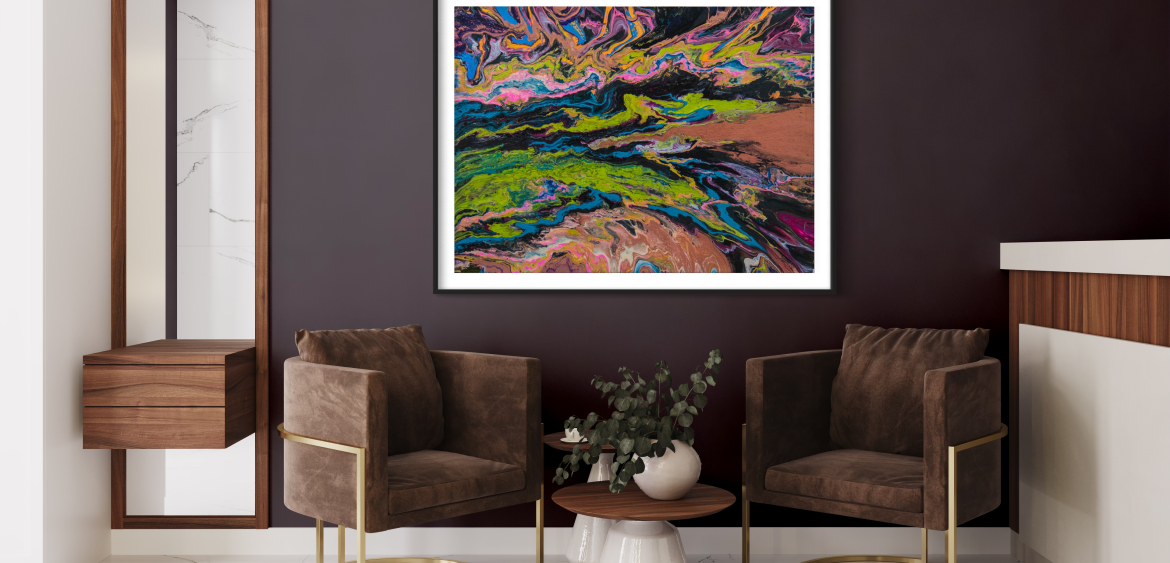
Abstraction is a form of art that encourages imagination and emotional involvement. Its roots lie in the intuition and freedom of the artist. The artist has the ability to look beyond the physical and translate intangible emotions onto the canvas. The audience then has the opportunity to connect with the artist’s intention and free their own mind of visual restrictions.
Historically, abstraction emerged in the nineteenth century as a reaction to academic painting or realism. Realism pays attention to every tiny detail. Abstraction gives the artist the freedom to trust their intuition. This freedom allows them to create art that is equally worthy of an audience. The most important thing to understand about abstract art is that it does not need a meaning. It does not require a narrative or even a singular explanation.


It is easy to appreciate a Van Gogh or a Rembrandt, as the mastery of technique is visible. To appreciate abstraction, we should focus on the success of a piece in evoking emotion. It is not about how realistically the artist has painted something or someone. Abstract paintings can also be appreciated by examining each element of art separately. These elements include color, shape, line, texture, space, and value. An abstract artist’s skills lie in their ability to use colors and textures effectively. They excel in creating a sound composition from these elements.
In conclusion, abstraction is an art form that offers a unique and emotional experience to every individual. It challenges us to think beyond the physical and to appreciate the power of imagination.


1 Comments: