

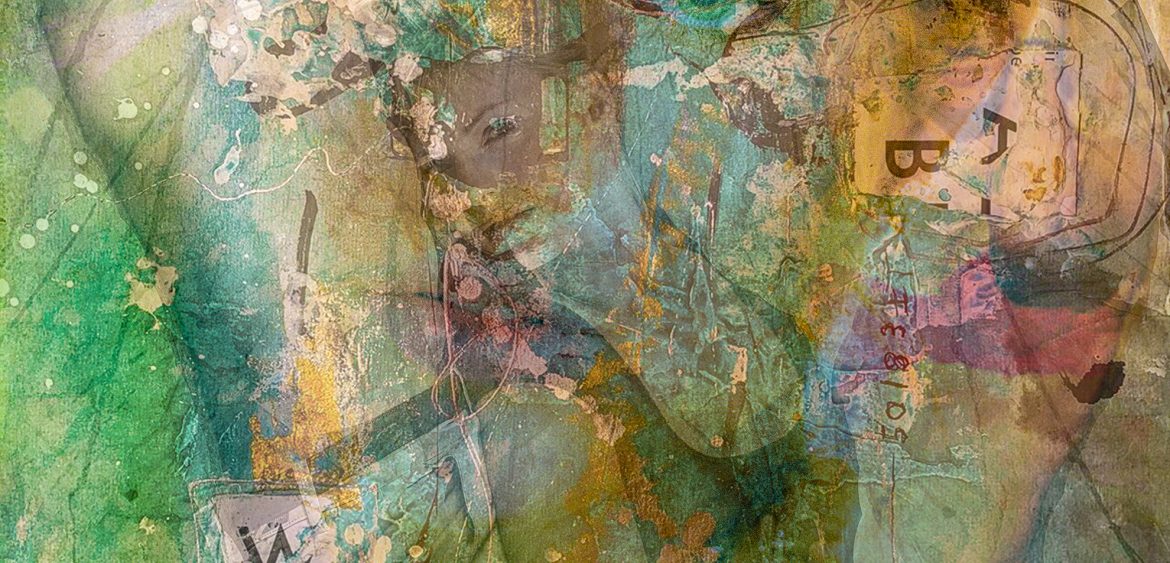
The studio hummed with frenetic energy. The sound was a symphony of scraping palettes. Brushes bristled against the canvas. Dowling’s voice murmured lowly. He muttered to himself, lost in the world he was weaving on the easel before him. His eyes shone with an almost manic intensity. They darted between the canvas and the riot of colors on his palette. His hand moved with a feverish urgency. Around him, the walls were a testament to his obsession. They displayed 850 masterpieces. Each one showed the relentless creative fire that burned within him.
Dowling, like the titans of art history before him, was consumed by the insatiable need to create. It was a force that pulsed through his veins, a hunger that can never be fully satiated. He often spoke of the “divine itch.” It was an irresistible urge to translate the visions haunting his waking hours. They bled into his dreams, compelling him to bring them onto the canvas. Sleep was a fleeting visitor, a mere interruption to the ceaseless dialogue between his mind and his art. “Time ceases to exist when I’m in the throes of creation,” he once confessed. “There’s only the canvas, the colors. It’s the relentless pursuit of capturing the essence of the feeling.”


This all-consuming dedication to their craft is a thread that connects artists across time and disciplines. Michelangelo spent four years lying on his back painting the Sistine Chapel ceiling. He famously declared, “People wouldn’t find it wonderful at all. They would know how hard I had to work to gain my mastery.” His obsession caused both physical and emotional struggles. It serves as a testament to the sacrifices artists make in pursuit of their vision.
Vincent Van Gogh had a turbulent life that was deeply connected to his art. In a letter to his brother, he wrote, “I am always doing what I cannot do yet.” He believed this was necessary to learn how to do it. He relentlessly pursued self-improvement. He pushed the boundaries of his abilities. This fueled his prolific output. It ultimately led to his groundbreaking contributions to Post-Impressionism. His “Sunflowers,” thick with impasto and vibrant with color, are a testament to this dedication. Each brushstroke shows his relentless pursuit of capturing the essence of light and form.
For Frida Kahlo, painting was a form of catharsis. It was a way to process the physical and emotional pain that plagued her throughout her life. “I paint myself because I am so often alone,” she said, “because I am the subject I know best.” Her self-portraits are raw and unflinching. They are a testament to the power of art. Art can transform personal struggles into universal expressions of the human condition. Each brushstroke on her “Broken Column” speaks volumes of her resilience and her ability to transform suffering into art.
Pablo Picasso, the inexhaustible innovator, believed that “art washes away from the soul the dust of everyday life.” His restless experimentation with form, perspective, and style was evident in his prolific output across various mediums. This reflected his insatiable desire to explore the limitless possibilities of artistic expression. His “Guernica” is a powerful anti-war statement. It showcases his relentless drive to challenge conventions. He used art as a tool for social commentary.
Georgia O’Keeffe was captivated by the stark beauty of the American Southwest. She sought to capture its essence with her bold and sensual paintings of flowers and landscapes. “I found I say things with color and shapes that I couldn’t say any other way,” she explained. She was obsessed with finding the visual language to express her unique connection to the natural world. This is evident in her iconic “Cow’s Skull: Red, White, and Blue.” It symbolizes the American West and its stark beauty.
Salvador Dali, the master of Surrealism, explored the depths of the subconscious. His paintings are a dreamscape of melting clocks and distorted figures. “The only difference between me and a madman,” he declared, “is that I am not mad.” He was obsessed with exploring the irrational and the subconscious. This obsession led to iconic works like “The Persistence of Memory.” These works are a testament to his desire to challenge our perceptions of reality.
Michelangelo, the master sculptor and painter of the Renaissance, believed that every block of stone has a statue inside it. The task of the sculptor is to discover it. His relentless pursuit of perfection is evident in his iconic works. His dedication to his craft shines through in pieces like the “David” and the Sistine Chapel ceiling. He had an unwavering belief in the power of art to transcend the earthly realm. He carved and painted with a fervor that consumed him. His obsession with capturing the beauty and divinity of the human form drove him to create masterpieces. These masterpieces would inspire awe for centuries to come.
Rembrandt, the Dutch master of light and shadow, captured the human spirit with a profound depth and sensitivity. His portraits were etched with a masterful understanding of chiaroscuro. They revealed the inner lives of his subjects. Their hopes, fears, and vulnerabilities were laid bare on the canvas. He had an obsession with capturing the human condition. His iconic works, like “The Night Watch” and his numerous self-portraits, showcase fleeting emotions. They reveal enduring truths that define our existence. Each piece serves as a testament to his relentless pursuit of artistic truth and his unwavering dedication to his craft.


And then there’s John Dowling, a contemporary heir to this legacy of passionate dedication. Like his predecessors, he is driven by an inner compulsion that transcends the pursuit of fame or fortune. His 850 masterpieces are not merely products of talent but of an unwavering commitment to his craft. He talks about the “trance-like state” he enters when immersed in his work. During this time, hours melt away. The outside world fades into insignificance. “It’s not a choice,” he insists, “It’s a necessity. I have to create, to translate the chaos in my mind into something tangible, something beautiful.”
This is the common thread that binds these artistic souls across centuries. It is the unwavering dedication. It is the relentless pursuit of their vision. It is the insatiable hunger to create. It is a fire that burns within them. It consumes them and drives them to push the boundaries of their craft. They strive to leave an indelible mark on the world. John Dowling, with his prolific output, stands as a testament to this enduring legacy. His unwavering commitment is a modern-day embodiment of the artist’s eternal obsession.


3 Comments: