

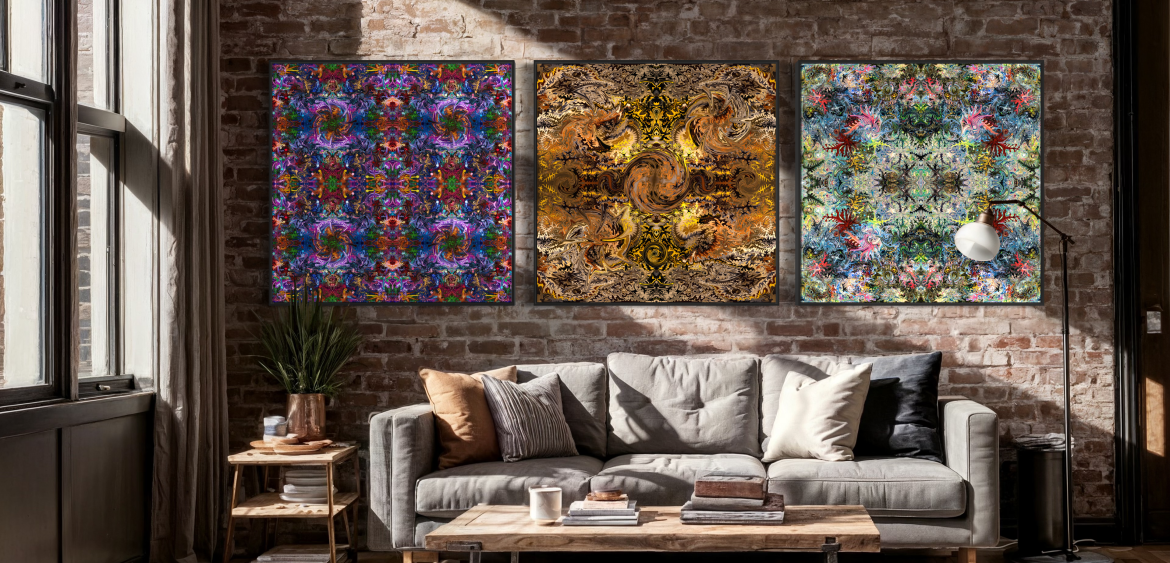
Art has always been a dance between reality and perception. It serves as a playground where artists can manipulate our senses. They challenge our understanding of the world around us. Illusion has been central in captivating audiences, from the trompe-l’oeil paintings of the Renaissance. Contemporary art installations also push the boundaries of creative expression.
John Dowling a.k.a. John Dowling Jr. is a master of both traditional and digital techniques. He embraces the art of illusion. His works play with our perceptions. They invite us to question the very nature of reality. His paintings, photographs, and digital creations demonstrate art’s power to deceive and delight. They ultimately reveal deeper truths about ourselves and the world we inhabit.
“Illusion is the first of all pleasures.” – Oscar Wilde
Illusionistic Techniques in John Dowling’s Art
John Dowling’s art employs a variety of illusionistic techniques to create captivating and thought-provoking experiences:
- Trompe-l’oeil (“Deceive the Eye”):
- Photorealistic Precision: Dowling’s mastery of photorealism in his paintings and photographs creates an uncanny illusion of reality. Objects and figures appear to leap off the canvas. They seem to emerge from the print. This blurs the lines between representation and actuality.
- Playing with Perspective: He skillfully manipulates perspective to create illusions of depth and dimension. This draws the viewer into the artwork and challenges their spatial awareness.
- Anamorphosis:
- Distorted Perspectives: Dowling uses anamorphosis. This technique distorts images when viewed from a normal angle. It reveals a hidden image when viewed from a specific vantage point. This creates an interactive experience for the viewer. It surprises them and forces them to engage with the artwork in a more active way.
- Lenticular Printing:
- Layered Images: Dowling uses lenticular printing. This is a technique that employs a lenticular lens. It creates the illusion of depth and movement. By interlacing multiple images beneath the lens, he creates artworks that shift and change as the viewer moves. This adds a dynamic and interactive element to his creations.
- Digital Manipulation:
- Distorting Reality: Dowling uses digital tools to distort and manipulate images. He creates surreal and dreamlike scenes. These scenes challenge our perception of the world. He uses techniques like the Liquify tool in Photoshop to warp figures and objects. This creates a sense of fluidity and movement.
- Optical Illusions:
- Playing with Perception: Dowling incorporates optical illusions into his work. He plays with patterns, colors, and shapes. This creates visual paradoxes that challenge our brains and question our assumptions about reality.


Scotomisation: Hiding in Plain Sight
John Dowling also employs a technique known as scotomisation. This term is derived from the Greek word “skotoma,” meaning darkness or blindness. Scotomisation involves strategically obscuring parts of an image. This technique creates a sense of mystery and intrigue. It may even convey a hidden message.
This technique is cleverly referenced in the movie The Da Vinci Code. “Scotomisation” is the psychological tendency in people to see what they want to see. They do not see what they don’t want to see. This happens in situations, in themselves, in anything, even in a painting. It occurs due to the psychological impact that seeing or not seeing would inflict.
In this case, it is one of the most famous paintings of all time. It is also an icon in the faith of millions of Christians. The emotional power of this is considerable. It is no wonder then that The Da Vinci Code book and film have been so controversial throughout the world.
Perception involves seeing and processing information through the filter of our intellect and our emotions. That’s why people often see the same thing differently. Scotomisation can be a false denial but also a false affirmation of our perceptions.
The term used in behavioral science is borrowed from the science of optics and ophthalmology. “Scotoma” comes from the Greek word skotos, which means to darken. It refers to a spot on the visual field where vision is absent or deficient.
Many believe that the French psychiatrist Rene Laforgue (1894-1962) was the first to use the term in a psychiatric sense. In a 1925 letter to Sigmund Freud, Laforgue wrote that “scotomisation corresponds to the wish that is infantile…not to acknowledge the external world but to put the ego itself into its place…”
At the time, Laforgue was talking about denial and repression in schizophrenics. However, the term can have a more general application.
Psychiatrist R.D. Laing (1927-1989) describes scotomisation as a process. It involves an individual psychologically denying the existence of anything they see with their own eyes. This happens when they really don’t want to see something and hence don’t want to believe it.
In Interpersonal Perception (1966), he writes that scotomisation is our ability to develop selective blind spots. This occurs regarding certain kinds of emotional or anxiety-producing events. So it may be a matter of faith with the evidence of The Da Vinci Code.
Seeing is believing, but not always.
The Deeper Meaning of Illusion:
John Dowling uses illusion not merely as a technical feat. Instead, it’s a way to explore deeper truths about the human experience. His art invites us to question our perceptions. It encourages us to challenge our assumptions. We are also invited to embrace the ambiguity and complexity of the world around us. Dowling’s art blurs the lines between reality and illusion. It reminds us that our perception of the world is subjective. This perception is also ever-changing. It encourages us to look beyond the surface. We should question what we see. It’s important to embrace the mystery and wonder that lie hidden within the fabric of reality.
In Conclusion:
John Dowling’s art is a testament to the power of illusion to captivate, challenge, and inspire. His masterful use of illusionistic techniques creates visually stunning works of art. It also invites us to embark on a journey of self-discovery. We are encouraged to explore the depths of our own perception. Through his art, John Dowling reminds us that the world is full of wonder, mystery, and endless possibilities. These are waiting to be unveiled by those who dare to look beyond the surface of things.


1 Comments: