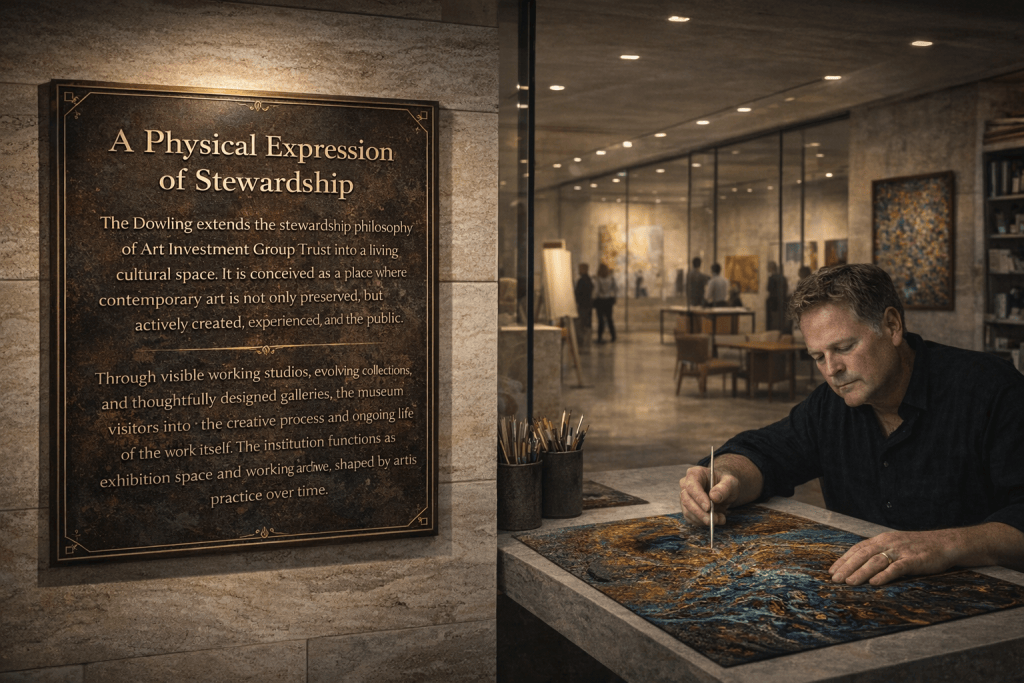

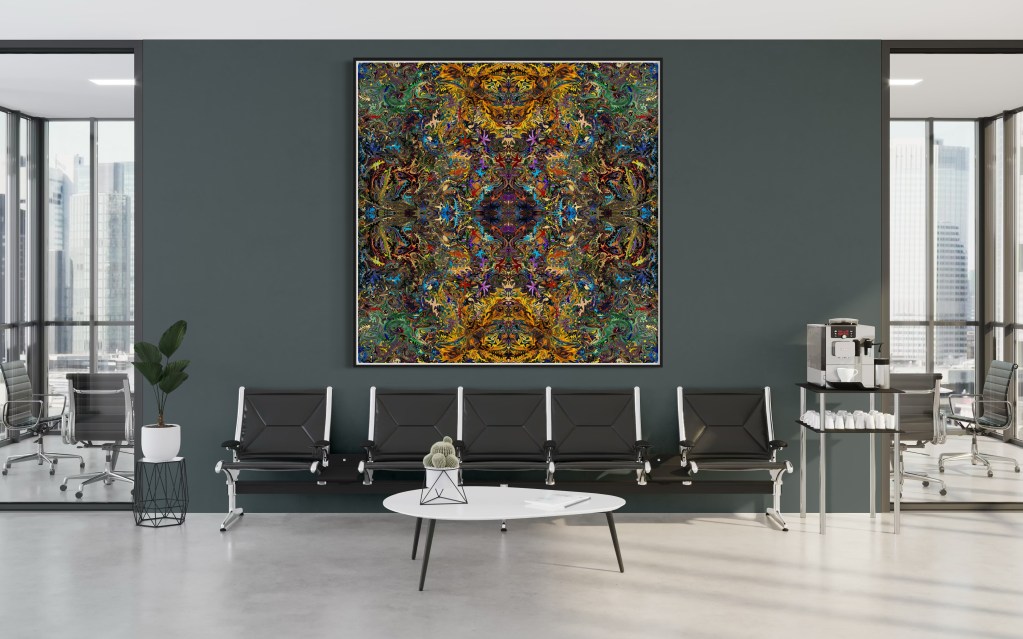
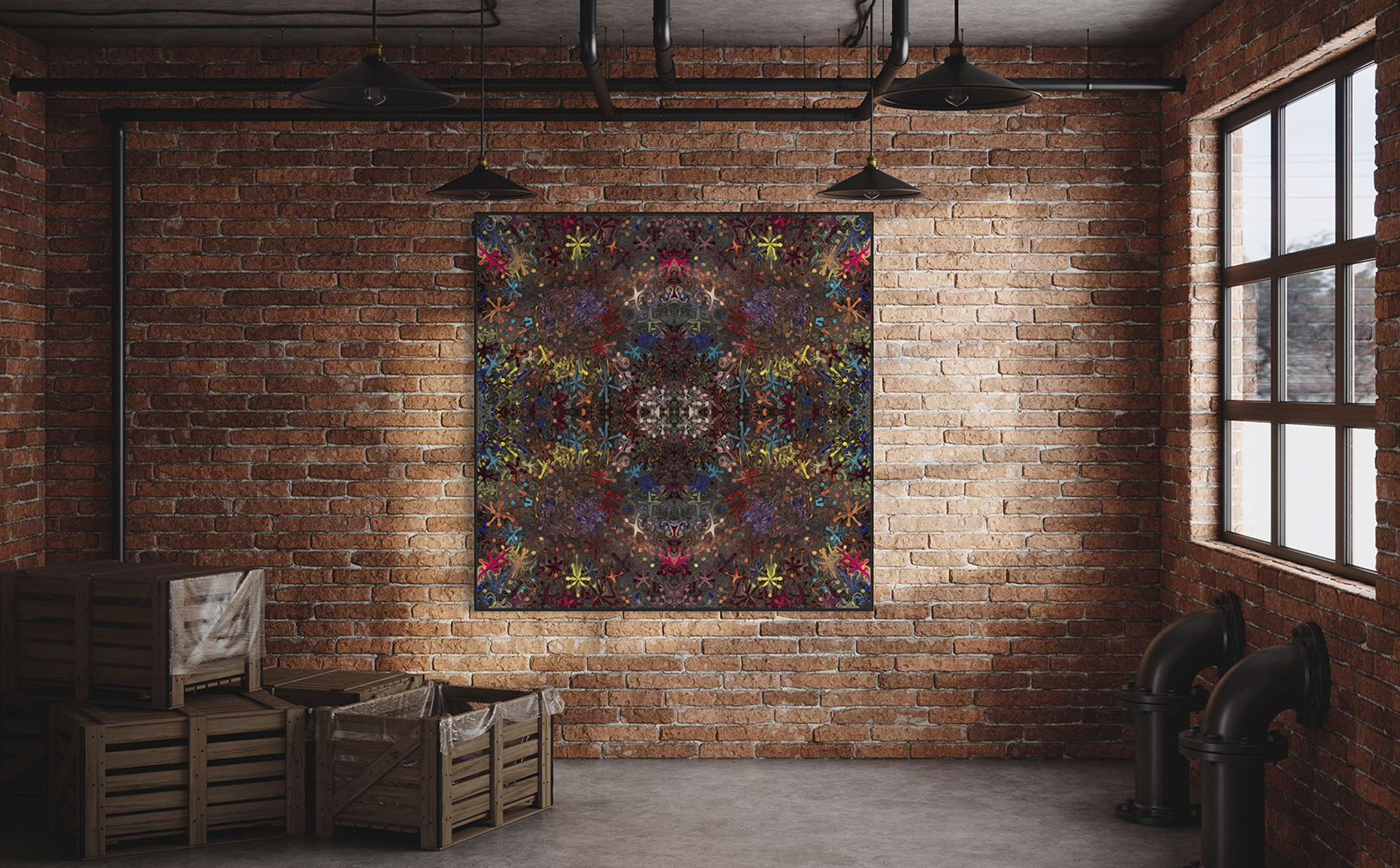
John Dowling’s American Graffiti masterpieces are a stunning convergence of technology, artistry, and tradition. They reimagine abstract expressionism through a modern lens. Each piece begins with photographs of original paintings, which are then painstakingly transformed on the computer. Dowling manually draws every square inch of the image. He blends brushstrokes, mouse movements, and tablet manipulations. The original photograph becomes unrecognizable, leaving behind only its color palette as a foundation. The result is a completely new and intricate composition, often comprising over 1.5 million individual strokes and manipulations. These monumental creations are designed at scales as large as 5 feet by 21 feet. Their size is as impressive as their complexity.

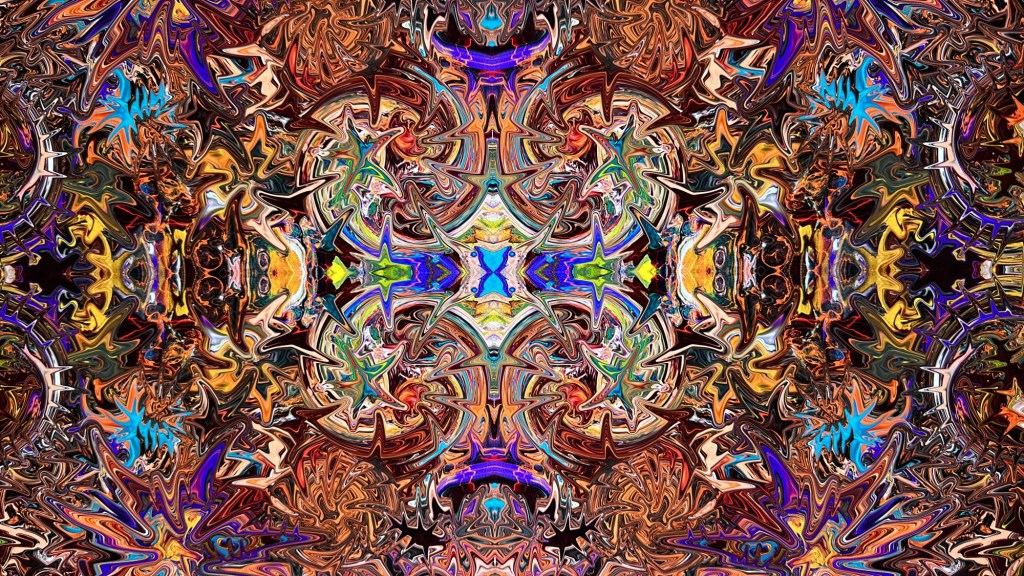
What sets Dowling’s work apart is the interplay of macro and micro detail. The thumbnails or even full-screen digital versions of his pieces hint at their grandeur. However, the true depth of these artworks can only be experienced in print. They need to be printed on aluminum, metallic canvas, or metallic cotton fiber. Up close, the viewer is invited into an entirely different world—one inhabited by “spacelings,” as Dowling affectionately calls them. These abstract, creature-like forms emerge from the intricate details, offering a unique visual discovery for every observer. In addition to spacelings, Dowling’s work includes abstract “totems.” These totems pay homage to the spiritual and cultural significance of traditional Pacific Northwest totem art. The vertical elements in many of his compositions echo the reverence, storytelling, and symbolism found in totem poles. They blend contemporary abstraction with deep historical roots.


Dowling also channels the spirit of the expressionist masters, such as Van Gogh, by utilizing a modified digital impasto technique. Dowling’s compositions pulse with movement and emotion. They are much like Van Gogh’s textured, swirling brushwork in Starry Night or Wheat Field with Cypresses. These swirling graphics replicate the expressive qualities of impasto in a digital medium. They draw the eye into a dynamic dance of color and form. This fusion of tactile energy, vibrant palettes, and intricate detail makes each piece a multi-dimensional experience—both visually and emotionally powerful.

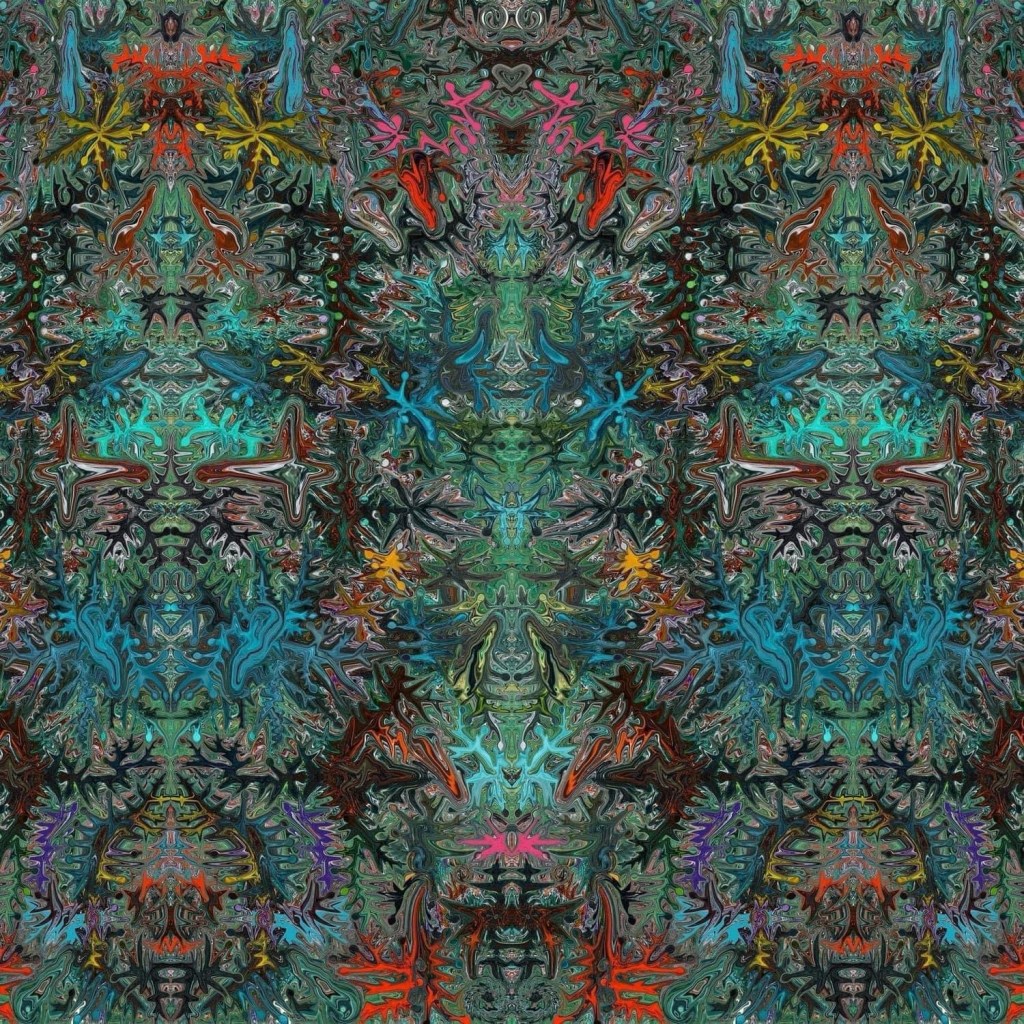
With every stroke, Dowling connects the digital and physical. He merges the historical and modern. He creates a legacy of innovation and artistry. This transcends time and medium. This is where his art becomes more than a visual statement—it becomes a lasting legacy.
John Dowling’s “American Graffiti” collection is a masterclass in compositional balance.
It demonstrates a deep understanding of both symmetrical and asymmetrical design principles. He seamlessly weaves these concepts into his artwork, creating visually captivating pieces that resonate with viewers on a deeper level. Let’s delve into some of the specific design principles he employs:
Elongated & Symmetrical Portrait:
Dowling often utilizes elongated canvases to create striking portraits that emphasize vertical symmetry. Imagine a portrait of a spaceship. Its sleek lines extend from the top to the bottom of the canvas. The spaceship’s central axis serves as the dividing line. This elongation accentuates the car’s form. It also draws the viewer’s eye along its length. This highlights the car’s elegance and power.
The symmetrical composition further enhances the portrait’s impact. The spaceship’s perfectly mirrored features create a sense of balance. This harmony allows the viewer to appreciate its design. The details are observed without distraction. This technique effectively captures the essence of classic American automobiles, showcasing their timeless beauty and iconic status.
Kaleidoscope Radial Symmetry:
Dowling’s fascination with radial symmetry is evident in his kaleidoscopic compositions. Imagine a circular canvas filled with vibrant colors and intricate patterns radiating from a central point. This technique creates a mesmerizing effect, drawing the viewer’s eye into the heart of the design.
He often incorporates elements like wheels. He uses abstractions that represent hubcaps as focal points. He also uses the circular headlights of classic cars in his radial compositions. The spokes of the wheel act as radiating elements. The intricate patterns on the hubcap add to this effect. The concentric circles of the headlights also contribute, creating a sense of dynamism and visual interest. These kaleidoscopic designs evoke a sense of wonder and nostalgia. They remind viewers of childhood toys and the simple pleasures of a bygone era. They also symbolize the cyclical nature of time and the enduring legacy of American automotive design.
Design Principles: Visual Perception and the Principles of Gestalt
Dowling’s work demonstrates a keen understanding of Gestalt principles, which explore how humans perceive and organize visual information. He utilizes these principles to create compositions that are both visually engaging and emotionally resonant.
- Similarity: Dowling groups similar elements together, such as a series of vintage gas pumps or a row of classic cars. This creates a sense of unity and cohesion in his compositions.
- Proximity: The placement of elements in close proximity to each other suggests a relationship or connection. This allows viewers to interpret the artwork in a meaningful way.
- Closure: Dowling often uses incomplete shapes or lines. He relies on the viewer’s mind to complete the image. This creates a sense of closure. This technique encourages active participation and adds a layer of intrigue to his artwork.
- Continuity: Dowling uses lines or shapes that flow smoothly from one element to another. This guides the viewer’s eye through the composition. It creates a sense of movement and rhythm.
- Figure-ground: Dowling masterfully plays with the figure-ground relationship, creating ambiguity and visual interest. A classic car might emerge from a busy background. A cityscape might dissolve into an abstract pattern. This challenges the viewer’s perception and invites them to explore the interplay between foreground and background.




Design Principles: Space and the Figure-Ground Relationship
Dowling’s compositions often feature a dynamic interplay between positive and negative space. He uses negative space to create balance, emphasize focal points, and guide the viewer’s eye through the artwork.
- Positive Space: The objects or figures in the composition occupy the positive space. In Dowling’s work, these might be classic cars, urban landscapes, or iconic symbols of Americana.
- Negative Space: The empty space surrounding the objects is the negative space. Dowling uses this space strategically to create a sense of depth, balance, and visual interest.
By carefully balancing positive and negative space, Dowling creates compositions that are both harmonious and dynamic. He uses negative space to isolate and emphasize key elements. This draws the viewer’s attention to specific details or creates a sense of isolation or loneliness.
Design Principles: Connecting and Separating
Dowling employs various techniques to connect and separate elements within his compositions, creating visual relationships and guiding the viewer’s eye.
- Connecting: He uses lines, shapes, and colors to connect elements and create a sense of flow and continuity. For example, a road winding through a landscape connects different areas of the composition and guides the viewer’s gaze.
- Separating: He uses contrasting colors, textures, or values to separate elements and create visual distinctions. This can help to define individual objects or create a sense of depth and perspective.
By skillfully connecting and separating elements, Dowling creates compositions that are both visually engaging and easy to navigate. He guides the viewer’s eye through the artwork, highlighting key elements and creating a sense of visual hierarchy.
Design Principles: Visual Weight and Visual Direction
Dowling understands that visual weight is not just about size; it’s also about color, texture, and placement. He uses these elements to create balance and direct the viewer’s attention.
- Visual Weight: Larger, darker, or more complex objects tend to have more visual weight than smaller, lighter, or simpler objects.2 Dowling uses this principle to create balance in his compositions, ensuring that no single element dominates the others.
- Visual Direction: The way elements are arranged can create a sense of movement and direction within the composition.3 Dowling uses lines, shapes, and colors to guide the viewer’s eye through the artwork, creating a visual journey.
Design Principles: Dominance, Focal Points and Hierarchy
Dowling’s compositions often feature a clear hierarchy of visual elements, with a dominant focal point that draws the viewer’s attention. He uses various techniques to create this hierarchy, including:
- Size: Larger elements tend to dominate smaller elements.
- Color: Bright or contrasting colors can draw attention to a specific element.4
- Placement: Placing an element in a prominent position can make it a focal point. This is often achieved by positioning it at the center of the composition.
- Isolation: Isolating an element from its surroundings can make it stand out.
By establishing a clear hierarchy, Dowling ensures that his compositions are easy to read and understand. He guides the viewer’s eye through the artwork, highlighting key elements and creating a sense of visual order.
Design Principles: Compositional Flow and Rhythm
Dowling’s compositions often feature a sense of flow and rhythm, created through the repetition and variation of visual elements. This creates a dynamic and engaging viewing experience.
- Repetition: Repeating elements, such as lines, shapes, or colors, creates a sense of rhythm and unity.5
- Variation: Varying the size, shape, or color of repeated elements adds visual interest and prevents the composition from becoming monotonous.
By skillfully combining repetition and variation, Dowling creates compositions that are both harmonious and dynamic. He guides the viewer’s eye through the artwork. This creates a sense of movement and rhythm. These elements enhance the overall viewing experience.
John Dowling’s “American Graffiti” collection is a testament to his mastery of design principles. He skillfully employs symmetrical and asymmetrical balance. He also uses Gestalt principles and other compositional techniques. This creates visually captivating and emotionally resonant artwork. His work celebrates American culture and history.